We’re going to rewind to our college days a bit. No, not to keggers, date parties, and dining halls, but to biology class. Yeah, I don’t remember it either. That’s ok. ;)*
Hypothalamic amenorrhea. I’ve mentioned this before, but haven’t explained what it is or why it happens. I could just tell you that “it’s when your brain stops communicating with your lady parts” and call it a day. But I won’t. If you’re a woman (which I’ve got a 50/50 shot that you are), you’re in your reproductive years, and you work out, then this is important stuff. Even if you don’t plan on having babies, I’d take a shot in the dark and guess that you enjoy feeling like a woman. So, guess what? This still applies to you!
So there I was, exercising like a maniac, shopping at Whole Foods, eating organically, eliminating most processed foods and feeling like I could model for the cover of Health Magazine. Unfortunately, my insides didn’t share the same sentiment and I was too naive and too wrapped up in my “health” bubble to notice, much less to care.
All the while, I had put my body into severe stress-mode and my entire reproductive system had shut down creating a domino effect of various adverse conditions.
So what is HA exactly?
Here’s where science kicks in: Remember learning about the hypothalamus? It’s a section of the brain responsible for the production of many of our hormones. The hormones from the hypothalamus direct several functions, such as temperature regulation, thirst, hunger, sleep, mood, sex drive, and the release of other hormones within the body.
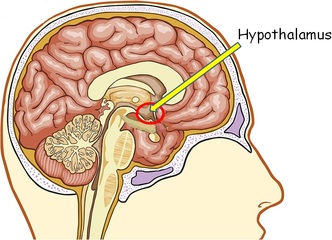
I blame it all on this guy.
The hypothalamus produces the gonadotropin releasing hormone (GnRH). When this hormone is released, it induces the production of several other hormones important for menstruation, such as the luteinizing hormone (LH), estrogen and follicle stimulating hormone (FSH). When the hypothalamus stops the production of GnRH, communication switches off. Unfortunately, this halts the process of ovulation and menstruation. If you’ve ever had a detailed blood test done, you’ve probably seen these hormones on your lab result sheet.
Basically, when your body is undergoing so much stress, it kicks into “fight or flight” mode. (Cue our ancestors and how they dealt with times of famine.) When all is well, everything will be in balance and our stress hormones will be in control. However, if you are a stress-head like me who lets every little thing get to you, your stress hormones may remain chronically elevated. This signals to the brain that you are in a stressed (fight or flight) state. Certain organs are “non-vital” organs. These shut off first, conserving energy, so the “vital organs” can continue to function.

How do I know if I have it?
1. You have “menstrual dysfunction”. Specifically, this refers to not having a period for more than 3 months (after previously having a period).
2. You have low “energy availability”. This refers to the amount of energy (kcals) available for your organs to work. Here is where I (and many other women!) made crucial errors in my weight loss/heath journey. For many years I was in the harmful mindset of “calories in, calories out”. It sounds so silly now, but I NEVER accounted for the calories my body needed just to SURVIVE. As it turns out, and it’s different for everyone, my Basal Metabolic Rate (BMR) is about 1,200. I’m simplifying this, but essentially it means that I’m burning 1,200 kcals just to keep my organs (i.e. brain, heart, lungs and reproductive system) going. Considering at one point I was eating only 1,100-1,300 kcals and burning, on average, 600 kcals a day, it’s remarkable my reproductive system was the only organ to shut down.

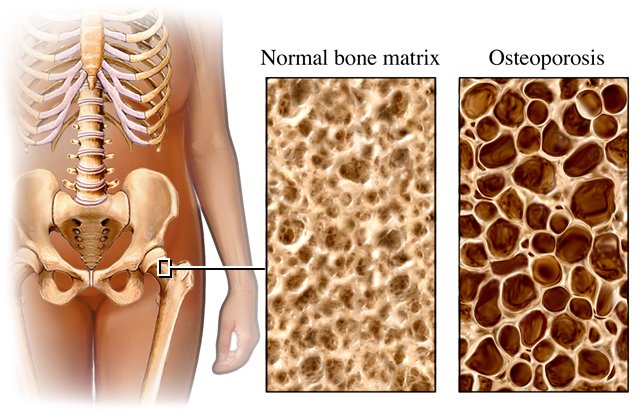
3. You’ve got decreased bone density. This is caused by a number of factors, which I won’t get into for this post. Just know that this is a serious problem as it leads to osteoporosis and increased risk of injury. You should have peak bone density in your 20’s. From your 30’s onwards, you will start to lose it. If you think you’re at risk, I would strongly recommend getting a bone density scan (sometimes called a DEXA scan) to check your bone health. My husband and I are still shocked that, after all my falls and accidents, I never broke a bone.
What causes HA?
- Under-eating (in terms of calories and/or nutrients)
- Over-exercising
- Low body fat percentage
- Excess stress
- The oral contraceptive pill
Let’s be clear, you don’t have to have each of these in order to get HA. Personally, I wasn’t on the pill. I know plenty of women, of average weight, who were on the pill, experienced extra stress in their lives and used exercise to relieve it. This eventually led to a diagnosis of HA. You might be thinking “Hmm, that’s bizarre. We’re told to exercise to help deal with stress.” And you’re right. We are. And it is VERY helpful. However, our bodies all have an invisible exercise threshold. Some can’t handle the extra physical stress from, say, an hour of exercise a day, while others can easily handle two hours a day. That’s just the way the cards are drawn. This has been one of the hardest lessons to learn (and accept). To this day, I can’t help feel a sting when I see a pregnant woman running, or hearing about a newly pregnant woman who runs/works out more than me. I’m learning to accept that my body is unique and has unique needs.
Why should I care?
A lot of girls, especially in the running and CrossFit worlds, do not get their period. Most of these women have no interest in getting pregnant yet (or at all) so they don’t really see it as much of an issue. Some even see it as a blessing. I get that. I did too. Periods are inconvenient. They are messy. They can hurt. BUT they play an important role in our health. As women, getting a regular, monthly period signals that our menstrual cycle is healthy; our hormones are working as they should be, and we are capable of reproducing. Due to extremely low hormone levels, many women with HA, myself included, become uninterested in maintaining relationships, certain hobbies/activities, and sex. It’s often joked that women with HA work so hard to attain that “perfect body”, but eventually they become disinterested in seeing it (or having it be seen). What a waste.
I don’t have my period, but I don’t think I have HA. What else could it be?
PCOS. Polycistic Ovarian Syndrome. I was wrongly diagnosed with PCOS for several years, even though I didn’t have many of the symptoms. Unfortunately, doctors misdiagnose HA with PCOS a lot. Side Note: If you’ve been diagnosed with PCOS and exhibit some of the same symptoms that I did, I urge you to get a second opinion.
PCOS is the most common hormonal disorder among women of reproductive age and infertility is one of its most common symptoms. Polycystic means “many cysts,” and PCOS often causes clusters of small, pearl-sized cysts in the ovaries. The cysts are fluid-filled and contain immature eggs. Women with PCOS produce slightly higher amounts of male hormones known as androgens, which contribute to some of the symptoms of the condition.
Although the exact cause of PCOS is unknown, it is usually accompanied by frequent or absent menstrual periods, excess hair growth, acne, and obesity. Some speculate that it is difficult to lose weight if you have PCOS due to some of the hormonal imbalances (hence the large population of overweight women with PCOS).
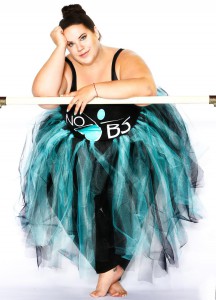
Speaking of PCOS…Have you seen My Big Fat Fabulous Life on TLC? If not, you should. Not only did the star, Whitney Way Thore, launch a “No Body Shame” campaign**, but she’s bringing national attention to the everyday struggles of being overweight and having PCOS. Whitney is refreshingly honest, funny and inspiring.
I’ve got HA. What do I do about it?
I’ve done a LOT of research, so I knew what I needed to do. However, it was a hard pill to swallow so I needed to hear it from my endocrinologist.
Here’s a short list:
- Increase calories. A lot. This is easier said than done. As someone who has drank from the “diet juice” for so long, it’s incredibly difficult to change that mind-set. It’s uncomfortable to feel that “full” feeling again and hard to address my hunger cues when I’ve taught myself to ignore them for so long.
- Exercise less. This is the hardest. I was told I could run (yay!) but 10 miles MAX a week (ouch). For someone that was used to running 10 miles a day on most days, it’s extremely hard to follow. I just have to keep reminding myself that having a baby is more important than running.
- Address your stress. My endocrinologist suggested I see an acupuncturist. My first reaction was “that’s just crazy and weird”. She urged me to give it a try and recommended a facility that focuses exclusively on fertility acupuncture. I’ll blog about the experience in detail later, but let’s just say I’m a believer.
- Be patient. Some women, once they address steps 1-3, get their period back in a matter of months. Others don’t get it back for years, if at all. It has been about 8 months since I’ve started this process, and so far nothing. Some days are harder than others. Situations like a fertile runner (mentioned above), or even just a pregnant stranger, can trigger a burst of sadness, but eventually it passes. My husband and I know we have options, we’re just hoping that, by some divine miracle, this process will happen naturally. Only time will tell.
I’m going to end this post with a list of things I’ve found to help reduce stress instead of exercise. My hope is that someone out there reads this before they let the damage of overexercise, under-eating and stress go too far. In this crazy, a million-miles-an-hour world that we live in, it is so easy to do too much. Too much work, too much school, too many family obligations, too much exercise. We want more and we want to be more. Stop. Just stop. Slow down. Enjoy the moment and R-E-L-A-X. I can almost guarantee your body needs it almost as much as your mind does!
- Take a bubble bath.
- Go shopping!
- Start a Pinterest project.
- Cook dinner.
- Call an old friend.
- Go for a drive.
- Write a journal entry (or a blog post!)
- Read a book.
- Go on a walk.
- Clean your closet (seriously, it can be therapeutic!)
XoXo,
Katie
*Much to your disbelief, I’m not a doctor. I know, it’s shocking. If you think something is off with you or your body, talk to your doctor. If your doctor doesn’t seem to listen, go find another one!
**You can learn more about the “No Body Shame” campaign here.
 thirtystars